

BAKU, Azerbaijan, November 14. Uzbekistan and the Climate and Clean Air Coalition (CCAC) discussed expanding cooperation on methane and black carbon emissions reduction, improving air quality, and implementing joint environmental projects during a meeting held on November 13 on the sidelines of the 31st UN Climate Change Conference (COP31) in Antalya, Türkiye.
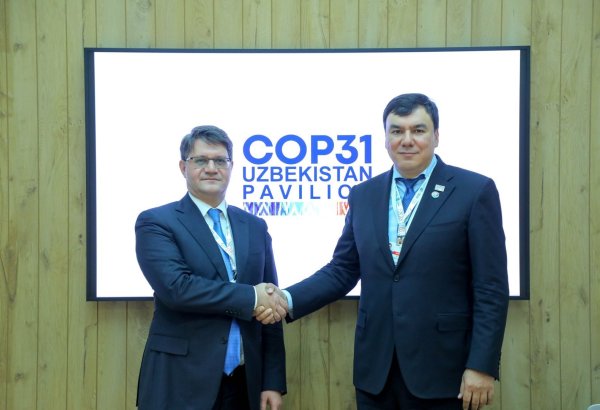
According to Uzbekistan’s National Committee on Ecology and Climate Change, the meeting brought together Aziz Abdukhakimov, Adviser to the President of Uzbekistan on Environmental Issues and Chairman of the National Committee on Ecology and Climate Change, and Martina Otto, Head of the CCAC Secretariat.
The sides reviewed ongoing cooperation and discussed new initiatives to reduce emissions of methane, black carbon, and other short-lived climate pollutants.
Uzbekistan joined the Global Methane Pledge in May 2022 and became a state partner of the CCAC in 2024. Two joint projects with a combined budget of $4.6 million are currently being implemented under the partnership.
The Uzbek side also welcomed the country’s inclusion in the CCAC’s Super Pollutant Country Action Accelerator program, which provides a $4 million support package for institutional capacity-building and technical assistance across four priority areas.
The discussions also covered the project titled "National Strategy for Reducing Black Carbon Emissions and Improving Air Quality." With a budget of $600,000, the project is scheduled to begin in December 2026.
The parties further discussed new initiatives launched by the CCAC and the UN Environment Programme (UNEP), including a global economic assessment of measures to address climate change and air pollution. According to the assessment presented at the meeting, every dollar invested in such measures could generate approximately $15 in economic returns.
Uzbekistan also expressed interest in the Farmers FIRST initiative, which aims to reduce emissions from agricultural activities.
To strengthen coordination, the Uzbek side proposed establishing a National Unit for Short-Lived Climate Pollutants under the National Center for Climate Change. The proposed unit would coordinate the work of relevant government agencies and organizations across the energy, waste management, transport, and agriculture sectors.
Regional cooperation was another key topic. The sides highlighted President Shavkat Mirziyoyev’s proposal to establish an intergovernmental consortium, "Clean Air for Central Asia," to mobilize green financing for industrial modernization and emissions reduction.
In this regard, Uzbekistan proposed hosting a regional CCAC workshop in Tashkent in 2027 to discuss air quality, black carbon, and methane emissions.
Following the meeting, the parties agreed to develop a joint work plan under the Accelerator program, setting out specific activities, implementation timelines, and co-financing arrangements. Both sides reaffirmed their commitment to strengthening cooperation and advancing initiatives to reduce climate pollutants and improve environmental quality in Uzbekistan and across Central Asia.