



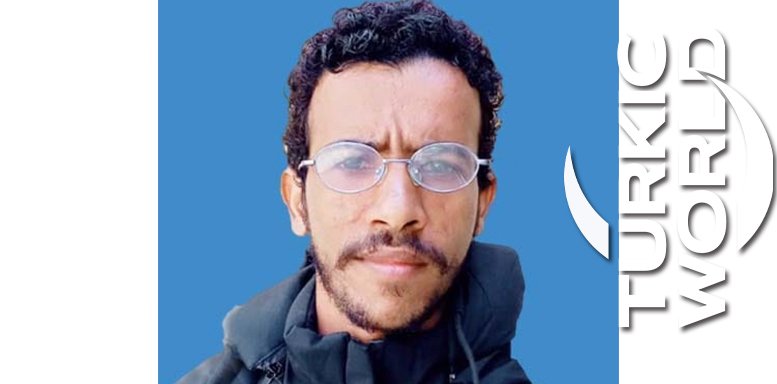
BAKU,TurkicWorld: Abdulhamid Hamid Al-Kba / Writer and researcher specializing in Central Asia and Azerbaijan affairs
In a world rife with cultural and religious tensions, Uzbekistan’s voice stands out—calm yet impactful—calling for dialogue instead of confrontation.
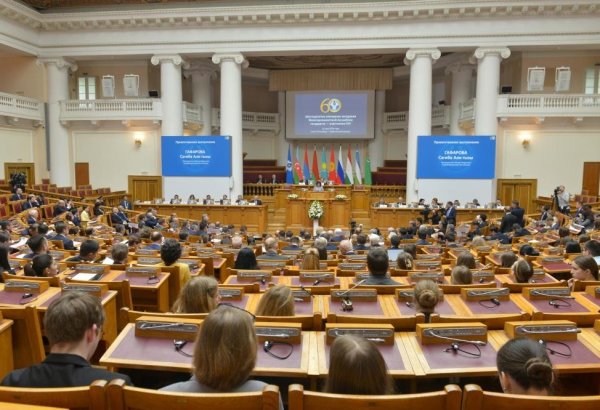
On March 15, the International Day to Combat Islamophobia, UNESCO headquarters in Paris hosted an international discussion panel titled “Combating Islamophobia: Promoting Human Rights through Education, Culture, and Dialogue.”
This was not just another routine diplomatic meeting; it was a moment affirming that education and heritage can be the most powerful weapons against hatred.
Organized by Uzbekistan’s Permanent Mission in collaboration with the Organization of Islamic Cooperation Group at UNESCO, the event brought together more than 200 representatives from member states, the diplomatic corps, civil society, and experts.From Samarkand to Paris: How Heritage Becomes a Tool for Peace
The United Nations High Representative for the Alliance of Civilizations, Miguel Ángel Moratinos, was clear in his video address: “Statements alone are not enough; we need practical measures in education and culture.”
He emphasized in similar contexts that confronting hatred against Muslims requires genuine investment in education to explain “what true Islam is, how to respect others, and how to place differences in their proper context.”
This is precisely what Shahzod Islamov, Deputy Director of the International Imam Maturidi Research Center, presented on behalf of Uzbekistan. Islamov outlined his country’s comprehensive vision: how the land of “Mawarannahr” has transformed from the cradle of Islamic scientific heritage into a living model of harmony and mutual respect.
He reminded the audience of prominent figures such as Imam al-Bukhari, al-Tirmidhi, al-Maturidi, Ibn Sina, al-Biruni, and al-Khwarizmi, stressing that this legacy is not merely historical memory but a spiritual and scientific foundation that nourishes values of peace and harmony in our contemporary era.From my personal perspective, Uzbekistan’s approach is brilliant in its simplicity and effectiveness. Instead of confronting hatred with defensive hostility, Uzbekistan has chosen a “soft offensive” through knowledge and education.
The initiative of the President of the Republic, Shavkat Mirziyoyev, presented at the United Nations General Assembly under the title “Enlightenment and Religious Tolerance” did not remain a mere paper resolution; it has become a practical program implemented on the ground. The General Assembly adopted a dedicated resolution under this title by consensus on December 12, 2018, aimed at promoting global access to education, combating ignorance, protecting freedom of belief, and preventing discrimination against believers.
Today, more than 130 nationalities and 16 religious denominations live in Uzbekistan in complete peace under the slogan “A tolerant society equals a stable state.”
This reality is supported by a legal framework that safeguards freedom of conscience, preserves Islamic manuscripts, and studies them in depth.In a separate session, attention was drawn to the Center for Islamic Civilization in Tashkent, announced during the 43rd UNESCO General Conference in Samarkand, alongside research centers such as the International Imam al-Bukhari Center in Samarkand.
These institutions are not traditional museums but integrated scientific-educational-cultural platforms that combine heritage preservation with the production of digital content, modern exhibitions, and youth educational projects. They connect the region’s legacy to contemporary development challenges and re-present “true Islam” as a religion of peace and science to refute negative stereotypes.From an analytical standpoint, I believe Uzbekistan’s experience reveals a truth we often overlook: Islamophobia does not stem solely from ignorance of religion, but from ignorance of Islamic history as a scientific and humanistic civilization.
When the world learns that al-Khwarizmi founded the science of algorithms and that Ibn Sina laid the foundations of modern medicine, it becomes difficult to accept negative stereotypes.
In our current era, where hatred escalates through social media platforms and geopolitical tensions rise, Uzbekistan has proven the effectiveness of this approach. Its digital programs, reaching millions of young people worldwide, have actively contributed to reducing the spread of extremist discourse, as recent reports from international organizations have shown success in lowering extremism rates among local and international youth.Nevertheless, this model is not without real challenges. Sustaining these efforts requires stable funding for research centers, confronting resistance from certain hardline currents both domestically and externally, and ensuring that international initiatives remain free from narrow political agendas to maintain their global credibility.UNESCO representatives praised these systematic reforms and saw them as a genuine contribution to building an inclusive global society.
This praise is not mere diplomatic courtesy but recognition that Uzbekistan has become an influential player in the agenda of harmony and dialogue among civilizations, reclaiming its historical role as a center of Islamic civilizational radiance that builds bridges of understanding between East and West.In conclusion, Uzbekistan’s model offers the world a vital lesson: harmony among religions is not a luxury but an existential necessity. When states invest in education, heritage, and dialogue, they not only protect their own societies but also contribute to sustainable global peace.
If more countries followed Uzbekistan’s path in turning their heritage into a bridge for communication, March 15 would become a day of celebration of unity rather than a confrontation with hatred.
This is the enlightened Islamic approach the world needs today: an approach that builds rather than destroys, enlightens minds, and unites hearts.