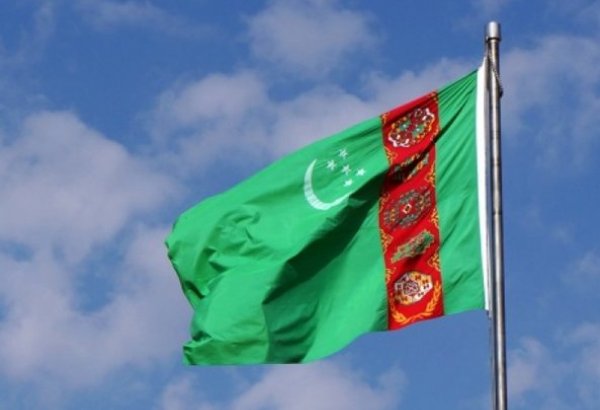


BAKU, Azerbaijan, November 17. Turkmenistan has outlined measures to modernize its transport infrastructure, expand transit capacity and develop international transport corridors, the country's Ministry of Foreign Affairs reported.
The plans were presented by the Turkmen delegation led by Deputy Foreign Minister Myahri Byashimova at the Second Ministerial Meeting on Interregional Security and Connectivity, held in Brussels yesterday.
In the context of cooperation with the European Union, the Turkmen side expressed support for the Global Gateway initiative and the further development of the Coordination Platform for the Trans-Caspian Transport Corridor.
Turkmenistan also emphasized the potential for establishing an integrated transport connectivity area linking Central Asia, the South Caucasus and the Black Sea region.
Among the practical areas for further cooperation, the Turkmen side identified improvements to transport infrastructure, simplified transit procedures, the introduction of digital transport documents and the creation of a coordination mechanism to address potential disruptions to international transport routes.
Meanwhile, Turkmenistan's geographical position gives it access to several major transport routes linking Central Asia with other regions. Located on the eastern coast of the Caspian Sea, the country connects the landlocked states of Central Asia with the South Caucasus and markets further west, while its southern borders with Iran and Afghanistan provide potential routes towards the Middle East and South Asia. The Organization for Economic Co-operation and Development (OECD) identifies Turkmenistan as a critical node of the Trans-Caspian Transport Corridor, noting the country's role in developing links between Central Asia and Europe.
This position places Turkmenistan at the intersection of two major transport axes. The east-west direction connects China and Central Asia with the Caspian Sea, Azerbaijan, Georgia and Türkiye, forming part of the Trans-Caspian International Transport Route, also known as the Middle Corridor. The north-south direction links Kazakhstan with Iran through Turkmen territory, providing access to Persian Gulf markets. The Turkmenbashi International Seaport is central to these routes, serving as a maritime gateway for Central Asian cargo moving across the Caspian. The World Bank included Turkmenistan among the nine countries covered by its September 2026 assessment of the Trans-Caspian corridor, highlighting the potential of coordinated infrastructure investment to expand trade and improve connectivity between Asia and Europe.
At the same time, Turkmenistan is developing its domestic infrastructure to support this transit role. The railway connecting Ashgabat with the Turkmenbashi seaport is an important link between the country's eastern and western transport networks and is being prepared for comprehensive modernization. The line is also connected with international routes such as Lapis Lazuli, TRACECA, North-South and East-West. Alongside railway upgrades, the country is expanding its highway network, including the Ashgabat-Turkmenabat high-speed road, while continuing to develop maritime infrastructure. These investments are intended to make the country's geographical advantages more practical for freight operators by improving connections between ports, railways and road networks.