


BAKU, Azerbaijan, November 13. Turkmenistan and the United Nations have discussed practical steps to implement the Awaza Programme of Action for Landlocked Developing Countries for 2024-2034, focusing on transport connectivity, trade, climate resilience and access to financing, the Ministry of Foreign Affairs of Turkmenistan reported today, November 13.
The issues were discussed during a meeting between Turkmen Foreign Minister Rashid Meredov and Roland Mollerus, Officer-in-Charge of the Office of the UN High Representative for the Least Developed Countries, Landlocked Developing Countries and Small Island Developing States, on the sidelines of the 31st UN Climate Change Conference (COP31) in Antalya.
Particular attention was paid to implementing the Awaza Political Declaration and the Awaza Programme of Action, adopted following the Third UN Conference on Landlocked Developing Countries (LLDC3), held in the Avaza National Tourist Zone of Turkmenistan on August 5-8, 2025.
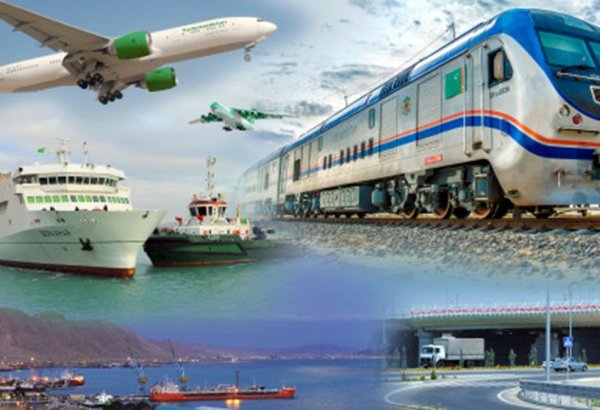
The Turkmen side emphasized the importance of consistently implementing the documents' provisions, particularly those concerning sustainable transport connectivity, expanded trade and economic cooperation, climate resilience and the mobilization of financial resources.
The discussions also covered the challenges landlocked developing countries face due to climate change and the need to improve their access to modern technologies and international climate finance mechanisms.
In this context, the Turkmen side highlighted the proposed Regional Centre for Climate Technologies for Central Asia as an initiative to strengthen scientific and technological cooperation and address environmental challenges.
The sides also discussed the coordinating role of the UN High Representative's Office in working with member states, UN agencies and international development partners to implement the Awaza Programme of Action.
Notably, the Awaza Programme of Action for Landlocked Developing Countries (LLDCs) for 2024-2034 is a United Nations framework aimed at addressing the structural development challenges faced by 32 countries without direct access to the sea. Adopted by the UN General Assembly on December 24, 2024, it sets out five priority areas: structural economic transformation and science and technology; trade facilitation and regional integration; transit, transport and connectivity; climate resilience and disaster risk reduction; and mobilization of financial resources and international support. The programme seeks to reduce transport and trade costs, improve access to international markets, promote economic diversification and strengthen the capacity of landlocked countries to respond to climate change.
The Third UN Conference on Landlocked Developing Countries (LLDC3) was held in the Awaza National Tourist Zone of Turkmenistan on August 5-8, 2025. The once-in-a-decade conference brought together representatives of landlocked countries, UN agencies, development partners and the private sector to address barriers to trade, transport connectivity and sustainable development. Its main outcomes included the adoption of the Awaza Political Declaration and endorsement of the Awaza Programme of Action for 2024-2034.
On September 3, 2026, Turkmenistan was unanimously elected Chair of the Group of Landlocked Developing Countries for the 2027-2028 term, with its mandate beginning on January 1, 2027. In this capacity, the country will coordinate the Group's activities and represent the collective interests of its 32 member states, including in advancing the implementation of the Awaza Programme of Action.