






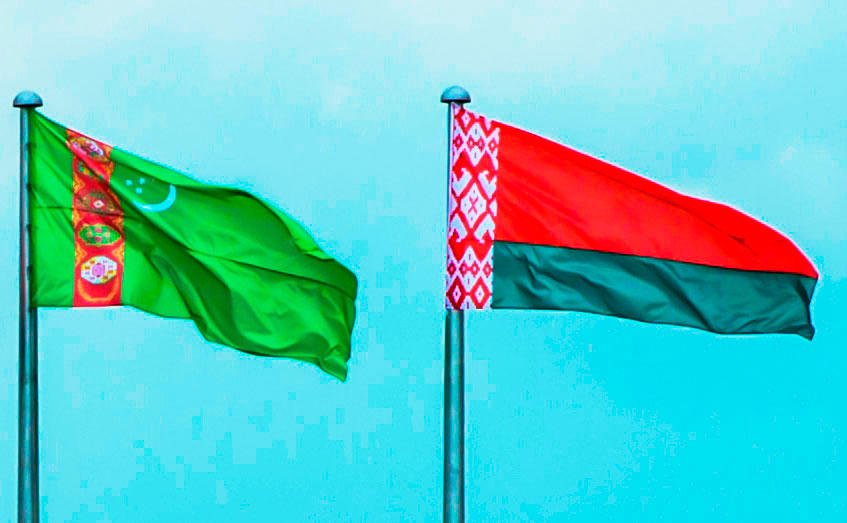
BAKU, Azerbaijan, November 10. Belarus and Turkmenistan have reviewed the implementation of existing bilateral agreements and discussed the preparation of new international legal documents during consultations in Minsk, the press service of the Turkmen government reported.
According to the publication, the Belarusian delegation was headed by Andrei Popkov, Head of the Main Treaty and Legal Department of the Ministry of Foreign Affairs, while the Turkmen delegation was led by Eziz Nazarov, Head of the Ministry's Treaty and Legal Department. Deputy Foreign Minister of Belarus Pavel Utyupin delivered the opening remarks at the meeting.
The consultations covered an inventory and reconciliation of international treaties and other legal documents currently in force between the two countries. The sides also examined practical aspects of implementing existing agreements and reviewed progress on draft bilateral documents.
Particular attention was paid to the safekeeping of original international treaties and current issues of international law.
Following the consultations, the heads of the two delegations signed a final protocol formalizing the agreements reached.
Notably, Turkmenistan and Belarus have maintained regular political and economic contacts, with the two sides describing each other as strategic partners. Economic cooperation has traditionally focused on industrial goods, machinery, agriculture, transport and infrastructure.
Earlier work of the Intergovernmental Turkmen-Belarusian Commission on Economic Cooperation identified mechanical engineering, agro-industry, construction, transport and communications among the areas with potential for expanded trade. Belarusian proposals included supplies of trucks, buses and agricultural machinery to Turkmenistan, while a Belarusian Machinery Service Center operates in Ashgabat.
The economic track remained on the agenda in 2026. During inter-ministerial consultations in Ashgabat in May, the sides reviewed bilateral trade and discussed ways to expand economic cooperation, including through the private sector. They also highlighted cooperation in education, science and culture.