






BAKU, Azerbaijan, September 9. Turkmenistan and China discussed prospects for expanding bilateral cooperation in migration management during a forum in Lianyungang.
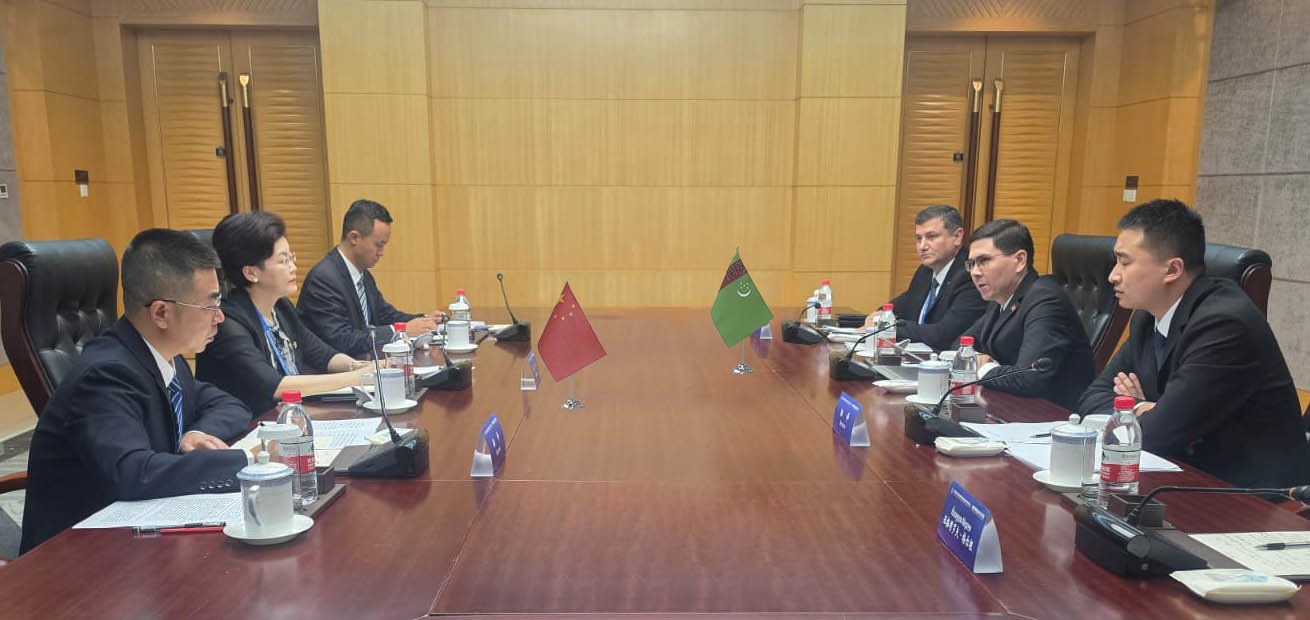
This was reflected in a press release published by the State Migration Service of Turkmenistan following the meeting between representatives of the service and China's National Immigration Administration held the meeting on September 8.
The sides discussed a wide range of bilateral interaction and emphasized the importance of regular working meetings in advancing mutually beneficial cooperation and identifying new areas of collaboration.
The officials exchanged views on prospects and opportunities for cooperation in the migration sphere and discussed its priority areas.
They also highlighted the importance of cooperation within international organizations in developing traditionally friendly relations between the two countries. The sides expressed confidence that bilateral cooperation would continue to develop in the future, the report said.
Meanwhile, Turkmenistan and China maintain comprehensive strategic partnership covering political dialogue, trade and investment, energy, transport, education, science and cultural and humanitarian exchanges. China is one of Turkmenistan’s largest trading partners, with natural gas forming a major component of bilateral economic cooperation. In April 2026, the seventh meeting of the Turkmen-Chinese Intergovernmental Committee on Cooperation focused on expanding trade, diversifying exports and strengthening cooperation between the two countries’ business communities.
Cooperation has also developed in areas related to people-to-people contacts, education and institutional interaction. The two countries have promoted exchanges between educational institutions and cooperation in science, culture and other humanitarian fields, while their agencies maintain contacts on law enforcement and related issues.
Against this broader background, the September 2026 meeting between Turkmenistan’s State Migration Service and China’s National Immigration Administration adds migration management to the areas of bilateral institutional cooperation and provides a platform for discussing new forms of interaction in this field.