
Baku. TurkicWorld:
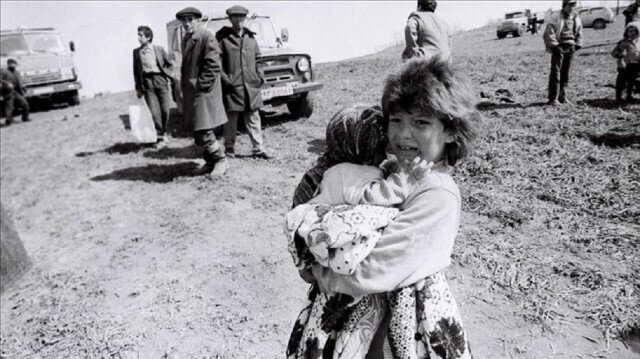
Every year countries across the world remember the Khojaly tragedy, occurred on the night of February 26, 1992, during the ongoing first Karabakh war. The Armenian forces attacked the city of Khojaly, killing hundreds of civilians, TurkicWorld reports with the reference to Yeni Şafak.
Some civilians decided to stay and retaliate, others made an attempt to escape through the city of Aghdam, but were attacked several times in the process.
Some of the refugees moved along the "free corridor", which was allegedly created by the Armenian armed forces, women, old people, and children moving on this route have been attacked as well.
Along with those murdered, dozens of civilians, mostly women and children, froze to death, trying to hide in the woods. More than a thousand civilians have been captured during the attack on Khojaly.
According to statements from analysts and researchers, within four days after the Khojaly massacre, about 200 bodies were taken to Aghdam alone, while in total, 613 people were killed during the assault on Khojaly. Those killed included 63 children, 106 women, 70 elderly people. In addition, more people were taken prisoner, and there is still no information on the fate of 150 of those people. Witness testimonies said citizens were taken captive for use as hostages in a later exchange.
International human rights organizations including Human Rights Watch and Memorial, which is included in the Russian Ministry of Justice's registration of organizations acting as foreign agents, provided detailed descriptions of the Khojaly massacre in their publications.
British journalist and author Thomas de Waal explicitly depicted the Khojaly massacre in his “Black Garden” book. The Khojaly tragedy was also covered by such media outlets as BBC, Reuters, Le Monde, Financial Times.
When speaking about these tragic events, British author, journalist, and policy analyst Anatol Lieven said, that it was quite obvious that those corpses lying in the snow were the bodies of those refugees shot while trying to escape.
Chingiz Mustafayev, famous Azerbaijani journalist, was the one who rushed to Khojaly right after the tragedy and captured the scale of what has happened. The whole world was shocked by the shot footage.
As evident from the pictures, wounds, and injuries on the bodies of the dead were not the result of accidental bullets and shrapnel, but were inflicted on purpose. Civilians, including the elderly and children, have become victims of a senseless fury, which cannot be justified.
This year marks the 31st anniversary of the Khojaly tragedy. Azerbaijan, as well as many countries of the world, remember it vividly and honor the victims.
The events in Khojaly are recognized as a massacre in two dozen US states and several countries, including Pakistan and Israel, while in some countries, like Mexico, Türkiye, Colombia, and Guatemala, the tragedy is given even harsher assessments. Memorials have been built in memory of the Khojaly tragedy in Türkiye and Germany.
Despite all this, those responsible for this massacre have not yet been held accountable for it. The Wikipedia page dedicated to the Khojaly massacre includes a denial from November 2019, when Armenian Prime Minister Nikol Pashinyan called the massacre a "blatant lie" that "was carried out by the Azerbaijanis themselves", despite the findings by Human Rights Watch which placed direct responsibility for the civilian deaths with Armenian forces.
Armenian society also insists on denying the tragedy, calling it the “enemy propaganda”. Yerevan never attempted to investigate the events of February 1992.
The relatives and friends of the victims remember that the perpetrators have not been brought to justice, the organizers and executors have not confessed the criminality of their actions, nor they felt any remorse.
Azerbaijan has liberated Karabakh from Armenian occupation, and, is even ready to live in peace with the Armenians living there. Nevertheless, even when the peace with Armenians is achieved, Azerbaijan will never be able to accept this pain and loss brought upon its people.