

BAKU, Azerbaijan, December 17. Georgia is strengthening its role in the Middle Corridor thanks to infrastructure projects and its strategic location, PMCG's leading economist Giorgi Papava said at the 28th annual meeting of the American-Georgian Business Council (AGBC) in Washington, dedicated to bilateral relations between Georgia and the US, TurkicWorld reports via PMCG.
According to Trend, citing the international consulting company PMCG, this was stated by PMCG's leading economist Giorgi Papava in his presentation at the 28th annual meeting of the American-Georgian Business Council (AGBC) in Washington, dedicated to bilateral relations between Georgia and the US.
According to the company, Papava emphasized the growing strategic importance of the Middle Corridor, a transcontinental route connecting China and Central Asia with Europe via the South Caucasus.
PMCG reports that Papava stated that despite ongoing challenges related to capacity, cost, and logistics, Georgia's geographical location and ongoing infrastructure development are strengthening its role in this increasingly important transport corridor: "Projects such as the expansion of the Port of Poti, the modernization of railways, and the advancement of the Anaklia deep-water port project have the potential to further enhance the region's capacity to attract diversified trade and investment."
Meanwhile, it is noted that although Georgia is not formally a member of the C5+1 platform, Papava emphasized the country's importance in broader regional processes. The increased involvement of the U.S. in Central Asia, especially in the areas of energy, supply chain diversification, and transport connectivity, creates opportunities for Georgia to act as a link between Central Asian markets and European partners. This places Georgia in a broader strategic context shaped by transregional cooperation.
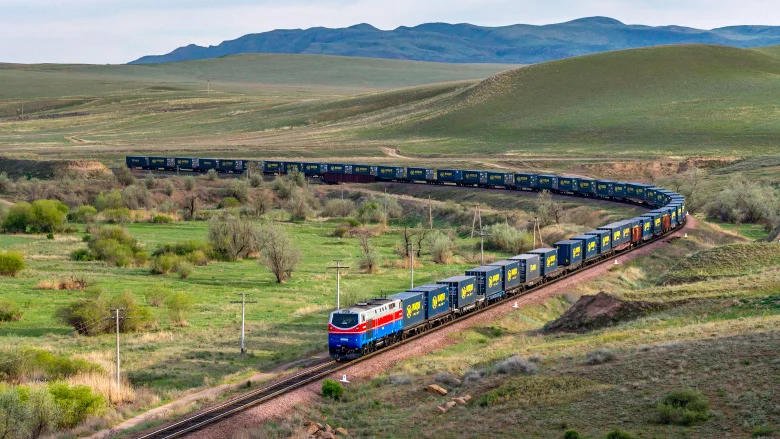
The Middle Corridor is a transport and trade route that passes through a number of countries in the region and connects Asia with Europe. It serves as an alternative to the traditional Northern and Southern corridors.
The route begins in China and passes through Central Asian countries such as Kazakhstan, Uzbekistan, and Turkmenistan. It then crosses the Caspian Sea, Azerbaijan, Georgia, and Türkiye, before entering Europe. The Middle Corridor is a land route that bypasses longer sea routes, connecting eastern Asia, including China, with Europe.