



BAKU, Azerbaijan, September 4. U.S. President Donald Trump has shared on Truth Social an article by U.S. Special Presidential Envoy Steve Witkoff, published by the Washington Examiner, highlighting the progress made toward peace between Azerbaijan and Armenia over the past year.
In his article, Witkoff noted that the first anniversary of the signing of the Joint Declaration on Peace between Azerbaijan and Armenia marks what he described as a major achievement that brought an end to more than 35 years of bloodshed. "Thanks to President Trump's bold and visionary leadership, today marks the one-year anniversary of the signing of the Joint Declaration of Peace between these two countries — a truly remarkable achievement. The President broke through previous constraints, putting peace between Azerbaijan and Armenia at the forefront," Witkoff wrote.
He said U.S. engagement with Baku began with his visit to Azerbaijan in March 2025, adding that it became clear after the first contact that U.S.-Azerbaijan relations had not previously received sufficient attention. According to Witkoff, Trump's foreign policy approach is based on a willingness to engage directly with different parties to advance U.S. interests, including efforts to resolve protracted conflicts.
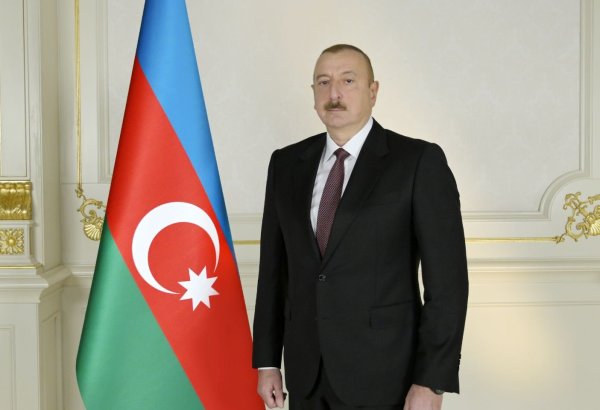
Witkoff also praised the role of Azerbaijani President Ilham Aliyev in the peace process, describing him as a strong and decisive leader willing to take difficult but necessary steps to achieve peace. "President Ilham Aliyev impressed us as someone who understood both the interests of his country and the broader agenda of regional stability. That visit convinced our team that progress was possible," he said.
According to Witkoff, one of the key practical issues was ensuring Azerbaijan's unhindered access to Nakhchivan. He said the issue had long been viewed solely as a zero-sum territorial dispute, adding that resolving it required "fresh thinking, creative solutions and, most importantly, leadership."
Witkoff said Trump demonstrated such leadership by creating conditions for the emergence of the TRIPP concept — a partnership between the United States and Armenia to establish unobstructed multimodal transport routes through Armenian territory while fully respecting its territorial integrity and sovereignty. "Trump chose practical results over a performative process, and that approach paid off," Witkoff said.
He added that over the past year, the United States had worked with Armenia and Azerbaijan to implement the agreements reached, expressing hope that the TRIPP route would eventually be connected to the Caspian Sea and that the concept could later be expanded to the Middle East. "In an era of complex conflicts unfolding simultaneously across multiple regions, Trump remains uniquely positioned to pursue peace and prosperity where others see only dead ends. The South Caucasus is safer and more stable today because Trump, Aliyev and Pashinyan chose results over rhetoric," Witkoff concluded.