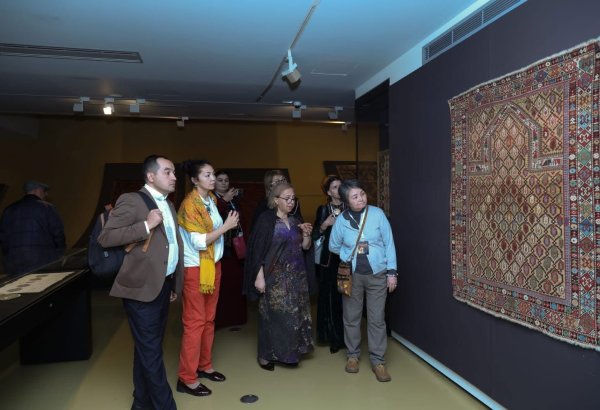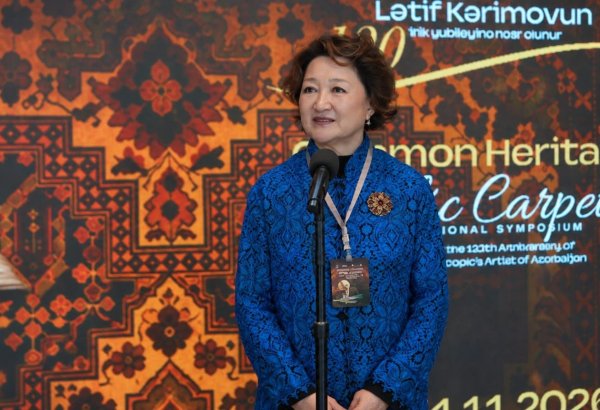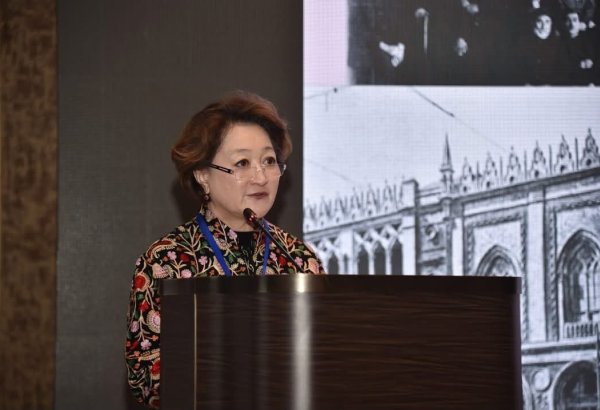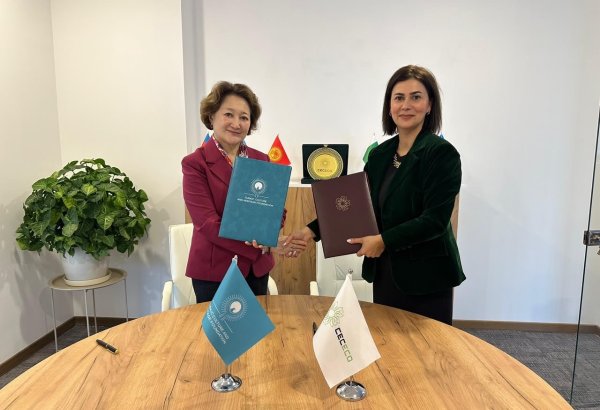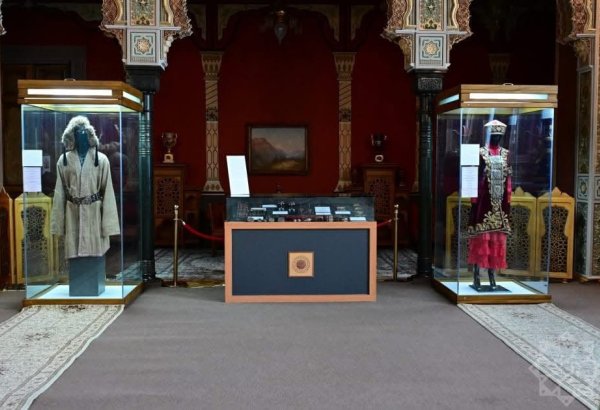


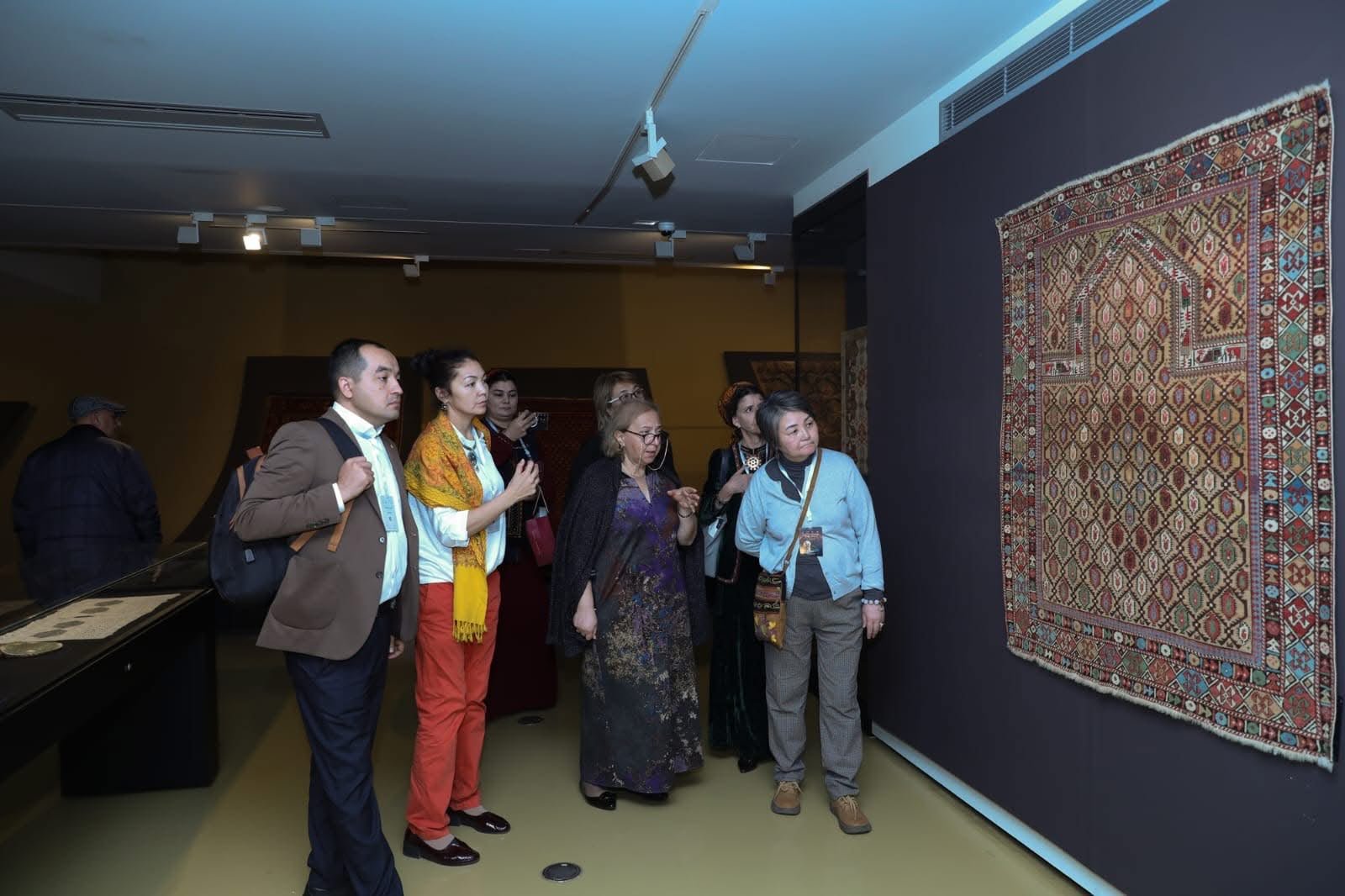
BAKU, Azerbaijan, November 25.On 23–24 November 2026, scientific panel sessions were held at the Azerbaijan National Carpet Museum as part of the International Symposium “Common Heritage: Turkic Carpet”, dedicated to the 120th anniversary of the birth of Latif Karimov, an outstanding artist, carpet scholar and educator.
The academic programme of the symposium, initiated by the Turkic Culture and Heritage Foundation and jointly organised with the Azerbaijan National Carpet Museum, Marmara University (Türkiye) and the Turkish Cooperation and Coordination Agency (TİKA), included keynote presentations, five panel sessions and a concluding roundtable discussion.
On the first day of the symposium, keynote presentations were delivered by Nuri Aksu, Project Manager at the Turkic Culture and Heritage Foundation, and Hakan Ünlü, a specialist in culture and tourism, under the title “From Knot to Pixel: Weaving the Digital Future of Turkic Heritage from Pazyryk to the Present”.
The programme continued with Session I, entitled “The Conceptual and Symbolic World of Turkic Carpet Art”. Moderated by Prof. Hakan Çiloğlu, the session featured presentations by professors from Marmara University and Süleyman Demirel University (Türkiye): Hakan Çiloğlu (Moderator), Mustafa Genç and Emre İkizler. Their presentations addressed the conceptual structure of Turkic carpet art, the symbolism of traditional weaving and the role of madder dye.
During Session II, dedicated to “The Legacy of Latif Karimov”, Prof. Kubra Aliyeva, Doctor of Sciences in Art Studies, shared her recollections of the outstanding artist. The session also featured Khadija Asadova (Moderator), a representative of the Azerbaijan National Carpet Museum, and Prof. Mammadhuseyn Huseynov of the Azerbaijan State Academy of Fine Arts, who presented scientific analyses of the ornamentation, colour schemes and composition in Latif Karimov’s works, as well as his exceptional contribution to Azerbaijani carpet art.
Within Session III, entitled “Museums, Collections and Turkic Carpet Traditions”, Amina Melikova, Director of the Azerbaijan National Carpet Museum (Moderator), Prof. Zhanerke Nauryzbayevna Shaygozova of Abai Kazakh National Pedagogical University (Kazakhstan), Natalya Bajenova, Head of the Department at the Abylkhan Kasteyev State Museum of Arts of the Republic of Kazakhstan, and Assoc. Prof. Chynykhan Satybaldiyeva of Osh State University (Kyrgyzstan) presented their research on museum collections, the typology of Kazakh and Kyrgyz carpet-weaving traditions, and their cultural dialogue with Azerbaijani carpet art.
On 24 November, the symposium continued with Session IV, entitled “Central Asian Carpet Collections and the Turkmen Carpet Tradition”. The session featured Leyla Hasanova, Project Manager at the Turkic Culture and Heritage Foundation (Moderator), Mansur Safayev, Researcher at the State Museum of History of Uzbekistan, who spoke about the history of the formation of the museum's carpet collections, and Oraznabat Saparova, Deputy Director of the State Museum of the State Cultural Centre of Turkmenistan, who highlighted the role of carpet products in the artistic decoration of the traditional Turkmen yurt.
Session V, entitled “Anatolian Weaving Heritage, Design and the Digital Future”, brought together representatives of the academic communities of Sakarya University and Yıldız Technical University, as well as representatives of Şehitkamil Municipality and design professionals. The speakers included Prof. Kadriye Didem Atiş, Osman Özgan, Esmer Erdem, Karaca Murat Erdem and Assoc. Prof. Ertan Toy. Their presentations addressed such topical issues as Anatolian weaving traditions, a comparative analysis of ancient monuments in Gaziantep and the ornamental motifs of carpets and kilims, the promotion of Turkic carpets as a global brand, and the creation of a digital archive of Turkic ornamental motifs.
Following the panel sessions, a roundtable discussion entitled “Future Prospects of Turkic Carpets” was held under the moderation of Khadija Asadova, PhD in Art Studies, followed by the official closing ceremony of the symposium.
The two days of scientific discussions provided an important platform for the systematic study of the shared carpet-weaving heritage of the Turkic world, the expansion of cooperation among museums and research centres, and the preservation of traditional art forms and their transmission to future generations through modern technologies.