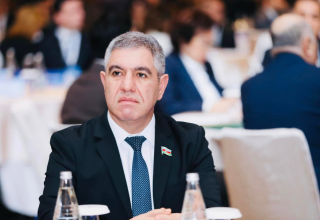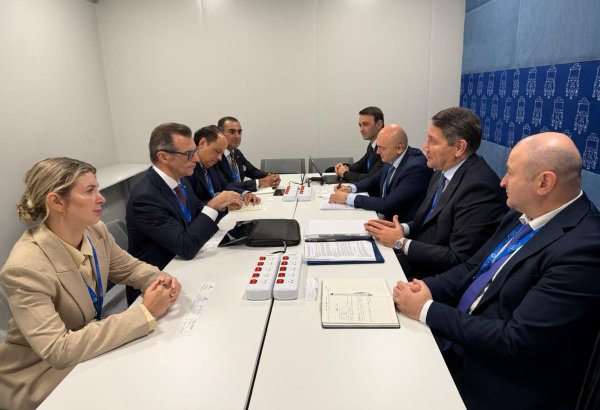


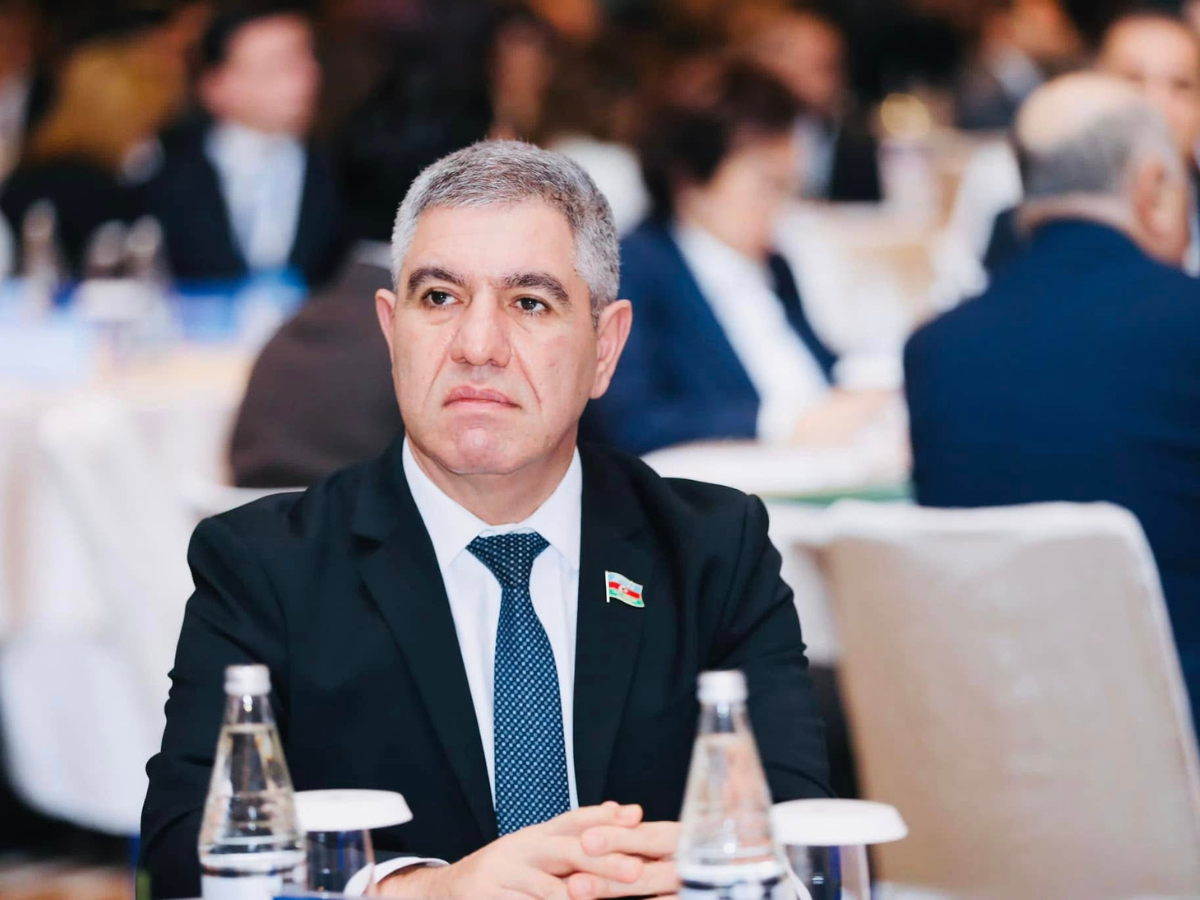
BAKU, Azerbaijan, October 20. POS terminal fees in Azerbaijan exceed tax rates, Vugar Bayramov, a member of the Azerbaijani Parliament's Committee on Economic Policy, Industry and Entrepreneurship, said at a committee meeting on Tuesday, TurkicWorld's correspondent reports.
According to him, high fees charged for POS terminal services in Azerbaijan discourage micro and small businesses from accepting cashless payments, hinder economic transparency and affect consumer prices. Reducing POS terminal fees, optimizing bank commissions and expanding the domestic interchange system would therefore be advisable.
The MP said that Azerbaijan currently has 22 banks, 14 electronic money institutions and nine payment institutions. Two payment institutions were licensed in 2026, while two electronic money institutions received licenses in 2025.
According to Bayramov, the number of POS terminals has increased 3.2 times since 2020, reaching 184,400. The average annual growth rate in this segment over the past five years stood at 26.3%.
He noted that the number of bank cards in circulation has grown by an average of 14.8% annually over the past decade, increasing 3.8 times overall. As a result, the number of bank cards in circulation reached 22.8 million at the end of May 2026.
However, the MP pointed out that several challenges remain in expanding electronic transactions.
He said that Baku accounts for 62.1% of all POS terminals in the country. Azerbaijan currently has one POS terminal for every 60 people, compared with 29 people in Georgia and 47 in Türkiye.
According to Bayramov, a significant proportion of active taxpayers do not use POS terminal services. Azerbaijan has 883,000 active taxpayers, while the number of POS terminals in use stands at 184,400. This means that the number of POS terminals is approximately five times lower than the number of active taxpayers.
Another issue highlighted by the MP was the high fees charged for POS terminal services. He said interchange fees for debit and prepaid cards in Azerbaijan are also high compared with those in several countries in the region.
According to data presented by Bayramov, Mastercard interchange fees for debit and prepaid cards range from 0.65% in Türkiye to 0.9%-1.3% in Kazakhstan. In Azerbaijan, the corresponding rates range from 1.14% to 1.73%.
He noted that fees for standard customer cards also vary across countries. In Azerbaijan, these rates range from 1.3% to 1.8%, compared with a standard rate of 1.32% in Türkiye, 1%-1.75% in Georgia and 0.9%-1.1% in Kazakhstan.
Bayramov emphasized that high POS terminal fees create additional costs for businesses and affect consumer prices.
According to him, large retailers often incorporate these costs into the prices of orders supplied to micro and small businesses. As a result, high commissions also negatively affect the development of micro and small enterprises. At the same time, these costs discourage some service providers and retailers from accepting card payments.
The MP said that reducing POS terminal fees is also important for improving economic transparency. A simplified tax rate of 2% of turnover currently applies to micro-entrepreneurs. However, total fees for using POS terminals can sometimes exceed this tax rate.
"This means that in some cases, a micro-entrepreneur who prefers cashless payments and wants to operate transparently has to pay banks more for using POS terminals than they pay in taxes," Bayramov said.
He noted that this situation discourages micro-entrepreneurs from using cashless payments and stressed that POS terminal fees should not become an obstacle to economic transparency.
In this regard, Bayramov said the Central Bank should review POS terminal fees and reduce them. According to him, high fees prevent micro-entrepreneurs from making greater use of cashless payments and create conditions that may encourage tax evasion.
Bayramov noted that although the Central Bank has taken certain steps in this area, more systematic measures are needed to optimize fees.
He also said it would be desirable for the Central Bank to use incentive mechanisms to reduce commissions on transactions made with bank cards.
The MP added that, as in several developing countries, expanding the domestic interchange system in Azerbaijan could help reduce the high commissions charged by banks.
"This would not only encourage cashless payments but could also lead to lower prices," Bayramov said.