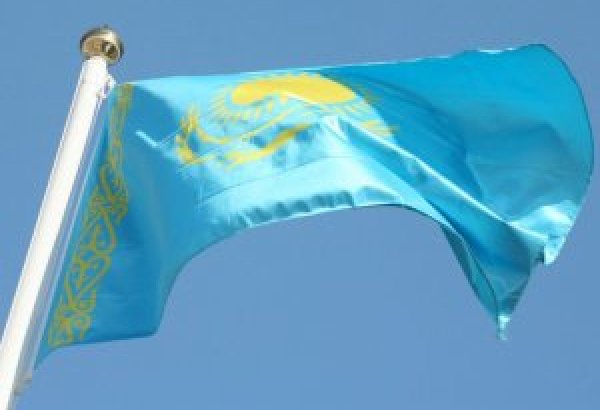


BAKU, Azerbaijan, November 4. Kazakhstan plans to establish a National Critical Materials Laboratory in Astana to accelerate the country's integration into global value chains, identify priority areas for developing its mineral resource base, and reduce dependence on imports, according to the Kazakh government.
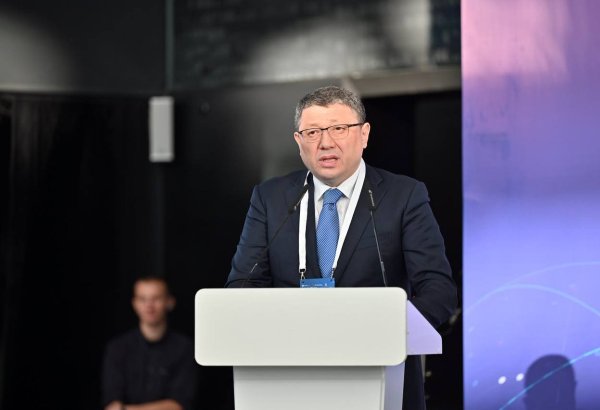
First Deputy Prime Minister of Kazakhstan Nurlybek Nalibayev announced this at a government press conference on the development of the real sector of the economy in Astana.
He said that particular attention is being paid to the development of the mining sector, the production of critical materials, and the modernization of geological exploration.
"Given growing demand from the automotive industry and the renewable energy sector, the sector's development will focus on four production areas. These include the production of battery materials, the processing and production of materials used in jet engine components, the semiconductor industry, and the establishment of a complete production cycle for permanent magnets.
"A pool of projects has been formed in these areas, including projects involving foreign investors. Cooperation is being developed with Germany's Bergbau AG, the Korea Institute of Geoscience and Mineral Resources, Australia's Lindian Resources Limited, and other international partners," Nalibayev said.
As part of the President's instructions to develop the geological sector, mineral exploration is being conducted using advanced technologies. Kazakhstan has launched its first government-led geological mapping project at a scale of 1:50,000.
Over the next three years, the country plans to implement 20 projects covering an area of approximately 100,000 square kilometers.
"Alongside traditional methods, advanced Ionic Leach technology is being used to identify concealed ore deposits, together with artificial intelligence, satellite data, and unmanned aerial vehicles. Preliminary data have already indicated the potential of seven sites.
"Sites whose potential is confirmed will be prepared for auction next year," Nalibayev said.
In addition, approximately 4.8 million units of primary geological data are being integrated into the Unified Subsoil Use Platform. This is expected to improve the use of accumulated geological information in the search for new deposits.