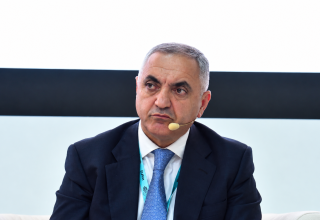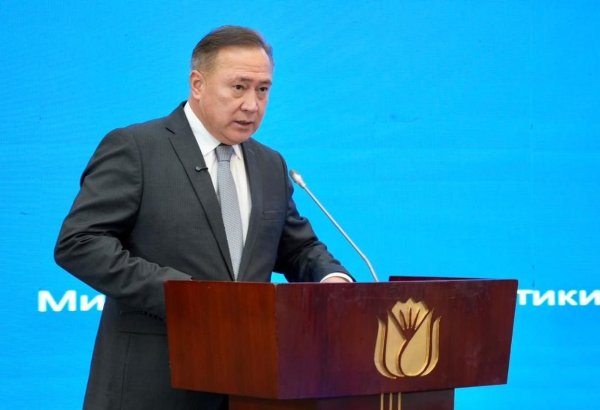








BAKU, Azerbaijan, October 2. Kazakhstan may start exporting computing power and compute tokens from 2027 as it expands its data center infrastructure, Bagdat Mussin, Chairman of the Board of Kazakhtelecom JSC, said during the AI & Digital Bridge 2026 forum in Astana.
"From next year, I hope we will start to export computing power and compute tokens, and that’s really a huge demand in the world now happening," Mussin said.
He said Kazakhstan plans to first build value from its domestic computing capacity and gradually expand the country’s data center infrastructure.
"I hope that in a few years we will get to the 1 gigawatt consumption, and after that, I think that we will enter into the giga-league," Mussin said.
According to Mussin, reaching this scale would allow Kazakhstan to engage major hyperscalers and neo-cloud companies not only to provide computing capacity in the country, but potentially to connect their operations with Kazakhstan’s developing space industry. He said the concept of Data Center Valley is not limited to a single location.
"Data Center Valley is like a conceptual vision. It’s not one place where we are going to install these data centers. All our territory can be Data Center Valley," Mussin said.
Mussin identified international connectivity and access to electricity as key factors in attracting hyperscalers to Kazakhstan. He said Kazakhtelecom had already reduced network latency from 90 milliseconds to 70 milliseconds and was developing a fiber-optic connection across the Caspian Sea.
"I hope that through this route we will shorten the latency to 50 to 45 milliseconds. And this is truly, extremely important to be connected to the global world of AI," Mussin said.
The Caspian fiber-optic project is being implemented by Kazakhtelecom, with installation and cable-laying works already completed, while adjustment and commissioning works are currently underway, he said.
Mussin also highlighted Kazakhstan’s potential role in providing edge computing services to Central Asia.
"Someone must serve Central Asia. Someone must serve this area, and we will be that state that will serve neighboring countries," he said.
He added that the government was providing incentives to support the development of the data center industry, including access to electricity at around 2.5 cents per kilowatt-hour.
According to Mussin, Kazakhstan’s power generation plans envisage more than 5 GW of additional capacity that could be used for data centers and computing infrastructure.
He also said Kazakhstan’s potential development of space-based data centers would depend on the country first building expertise and capacity in terrestrial data centers, computing infrastructure and connectivity.
Mussin noted that Kazakhstan is developing partnerships with technology companies including Nvidia and AMD, while the Ministry of Artificial Intelligence and Digital Development is working on legislation related to low-Earth-orbit satellite infrastructure.