
BAKU, Azerbaijan, September 17.
Kazakhstan Development Bank, a subsidiary of Baiterek Holding, and PGU Turkestan LLP signed an agreement worth 290 billion tenge (about $636 million) to build a 1-GW power plant in Kazakhstan's Turkestan region.
This was announced in a statement published by the Kazakhstan Development Bank (DBK).
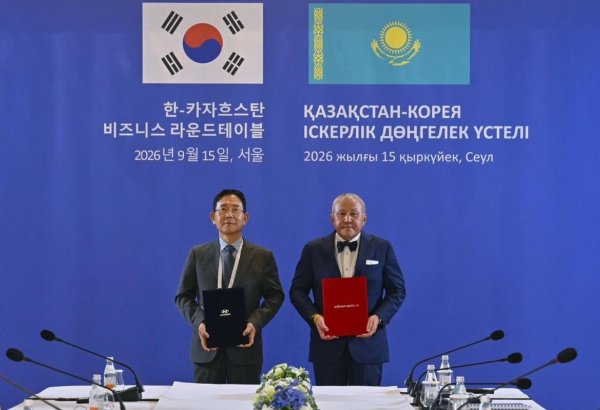
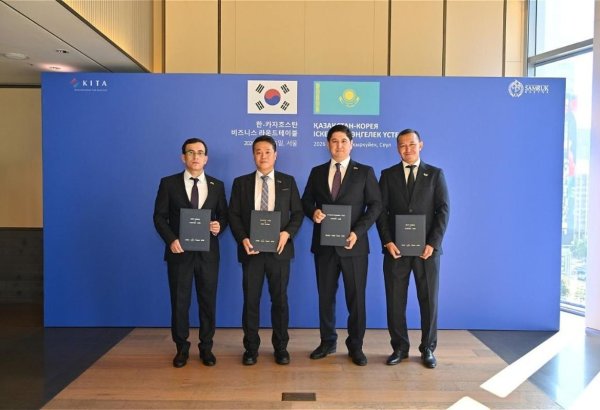
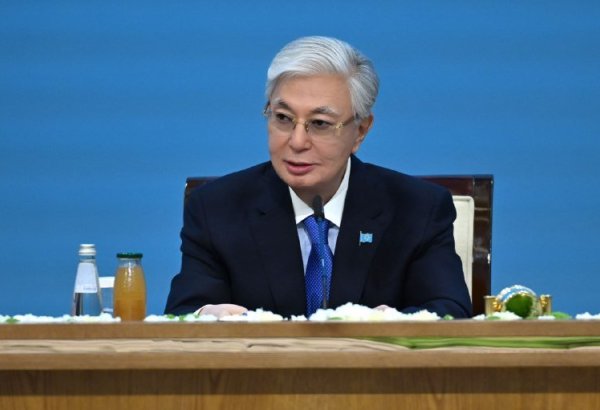
According to the information, an EPC contract for the construction of the facility was signed with a consortium led by South Korean company Doosan Enerbility Co., Ltd. and Integra Construction KZ LLP during the state visit of Kazakhstan President Kassym-Jomart Tokayev to South Korea.
The power plant will be based on a combined-cycle gas turbine with flexible generation capacity and will have a total capacity of 1,000 MW.
"The project will contribute to the development of Kazakhstan's energy infrastructure and increase the volume of flexible generating capacity in the country's power system," the bank said.
Another major agreement was signed between DBK and Korea Trade Insurance Corporation (K-Sure) in connection with the construction of a metallurgical plant in Pavlodar region.
DBK Chairman Marat Yelibayev and K-Sure Chairman and President Yangjin Jang signed a joint declaration providing for the organization of financing for the project and confirming the allocation of 48 million euros under K-Sure insurance coverage within a previously approved framework facility of up to 200 million euros.
The project is being implemented by Mineral Product International LLP using equipment and technologies from South Korean company SAC Co Ltd. The plant will have a planned production capacity of 160,000 tons per year, including 80,000 tons in the first phase. Its launch is expected to create 550 permanent jobs.
The products will be primarily exported to the European Union, Asian countries, and the US.
In addition, DBK's subsidiary Industrial Development Fund and Seoyon Summit Qazaq LLP signed a memorandum of understanding on a project to establish high-tech production of automotive components for KIA Qazaqstan. The memorandum provides for consideration of financing the project through instruments of the Industrial Development Fund.
The project envisages establishing high-tech production of automotive components in Kostanay, further expanding industrial cooperation between Kazakhstan and South Korea in the automotive sector.
Kazakhstan-Korea cooperation in the automotive industry already includes the production of Hyundai passenger cars. With DBK's support, Hyundai Trans Kazakhstan operates a plant with an annual production capacity of 50,000 vehicles. Astana Motors, together with South Korean companies Youngsan and Motrex, has also established production of automotive seats and multimedia systems in Kazakhstan.
Further localization plans include production of the new Hyundai Tucson, as well as mufflers and seat upholstery with Youngsan Glonet Corporation, wiring harnesses with THN Corporation and automotive floor coverings with Motrex.
DBK said its expanded international cooperation builds on 25 years of experience in financing major industrial and infrastructure projects.
Since its establishment, the bank has financed 218 investment projects and 151 export operations totaling 19 trillion tenge (about $41.6 billion), resulting in the launch of 151 new enterprises across Kazakhstan and the creation of more than 38,000 jobs.
In 2025 alone, DBK financed 77 projects totaling 2.3 trillion tenge (about $5 billion).