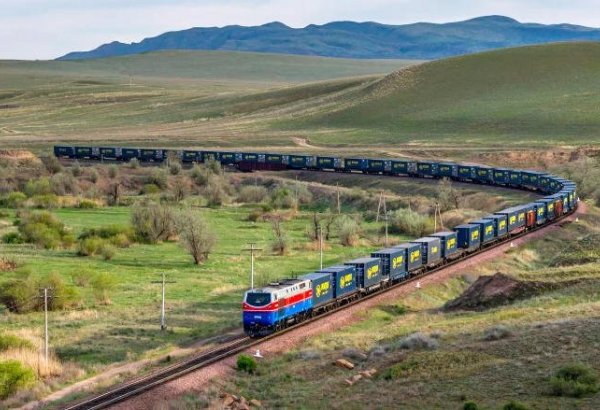





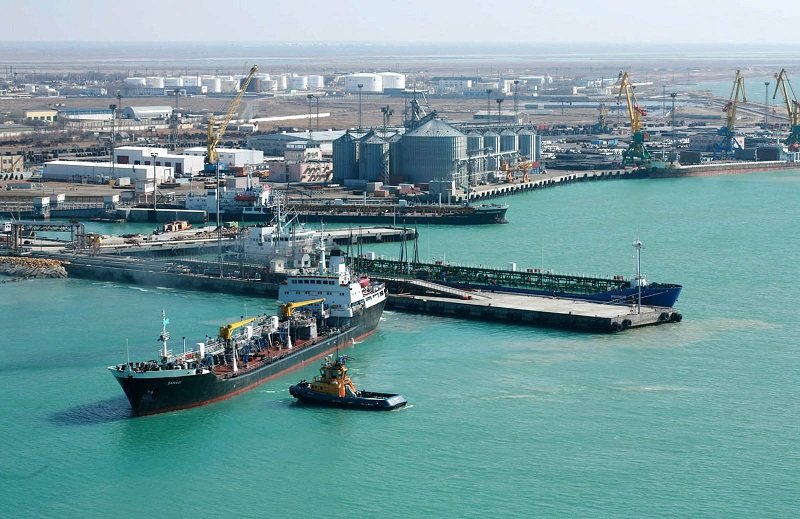
BAKU, Azerbaijan, August 10. Kazakhstan's Port Kuryk processed 884,800 tonnes of cargo in the first half of 2026, with rail freight accounting for the largest share at 475,500 tonnes, while 104,100 tonnes passed through the port’s grain terminal.
According to Kazakhstan Temir Zholy, rail freight accounted for 53.7% of total throughput, including 242,300 tonnes in export direction and 233,200 tonnes in import direction. Road cargo totaled 306,200 tonnes (34.6%), with exports accounting for 151,400 tonnes and imports for 154,800 tonnes. The grain terminal handled 104,100 tonnes, representing 11.8% of total volume.
Port Kuryk processes export, import and transit cargo within the Trans-Caspian International Transport Route (TITR, or Middle Corridor), connecting Kazakhstan and Azerbaijan across the Caspian Sea.
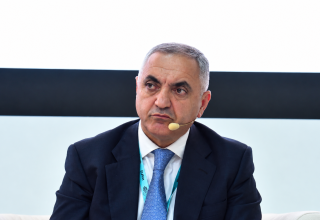
The port’s role is expanding alongside the broader growth of the Middle Corridor. Kazakhstan’s Vice Minister of Trade and Integration Aset Nusupov told Trend that the route has become one of the country’s key strategic assets over the past decade. "The figures speak for themselves. Over three years, from 2022 to 2025, the volume of transportation along the route increased more than fivefold. By the end of 2025, total cargo traffic reached 4.5–4.7 million tonnes, of which container transportation accounted for 76,900 TEUs, 36% more than a year earlier," Nusupov said.
He noted that in the first quarter of 2026, 125 container trains operated along the route, representing a 34.4% increase compared with the same period of 2025. During the same period, 85 trains operated on the Xi'an–Alat Port route, twice as many as a year earlier. Transit times along the corridor have also improved, declining from 28–32 days to 11–13 days.
According to Nusupov, the Kazakhstan-Azerbaijan segment remains central to the corridor’s development.
"The Baku International Sea Trade Port in Alat is currently the largest port on the Caspian Sea, with a capacity of up to 15 million tonnes and plans to expand it to 25 million tonnes. Kazakhstan, in turn, is accelerating the development of the Aktau and Kuryk ports, with the capacity of port infrastructure planned to reach 30 million tonnes per year," he said.
The vice minister emphasized that cooperation between Kazakhstan and Azerbaijan remains a key factor in advancing the route.
"The Middle Corridor is a joint project of Kazakhstan and Azerbaijan, and our interests in its development fully coincide. I would even say that this is a shared legacy that we will be able to proudly leave to future generations," Nusupov said.
Trend's analysis shows that Port Kuryk's H1 throughput of 884,800 tonnes annualizes to approximately 1.77 million tonnes, reflecting the growing importance of Kazakhstan’s Caspian infrastructure within the Middle Corridor. As one of the country's newer Caspian terminals, Kuryk is increasingly positioned as one of the key growth points for the route's Caspian segment, particularly for rail ferry and Ro-Ro cargo flows between Kazakhstan and Azerbaijan.
The port's development is supported by planned capacity expansion measures. Kazakhstan has ordered eight new dry cargo vessels for the Kuryk–Baku route at a cost of 74.3 billion tenge ($155 million), with deliveries expected by the end of 2028. Until additional vessels enter service, shipping capacity remains one of the main factors influencing the pace of further growth.
The relatively balanced export and import flows through Kuryk - 393,700 tonnes outbound versus 388,000 tonnes inbound across rail and road cargo - are notable for a developing transit route. Balanced flows indicate that the corridor is supporting two-way trade rather than functioning primarily as a one-direction export channel, which improves the commercial sustainability of ferry operations.
The grain terminal's 104,100 tonnes in H1, annualizing to approximately 208,000 tonnes, remains a modest share of Kazakhstan's overall grain exports. However, its strategic importance exceeds its current volume. Grain transportation through the Caspian provides Kazakhstan with an additional export option and expands access to markets in the South Caucasus, Iran and beyond.
Kuryk's current throughput represents a relatively small share of Kazakhstan's total transit freight, but its importance lies in the segment it serves. As infrastructure improvements continue - including vessel fleet expansion and upgrades at Kazakhstan's Caspian ports - the maritime section of the Middle Corridor remains one of the areas with significant potential for future growth.