





BAKU, Azerbaijan, May 22. The Strategic importance of Azerbaijani gas for Europe’s energy security is reinforced amid geopolitical tensions, TurkicWorld reports via Moody’s.
The rating agency notes that the Southern Gas Corridor closed joint-stock company’s business profile is underpinned by its fairly large scale and integrated operations across the natural gas value chain, encompassing interests in the upstream segment and critical pipeline infrastructure.
"The scale, capital intensity and geopolitical significance of SGC’s assets create high barriers to entry and enhance the company’s operational resilience. Geographic diversification, with transportation assets spanning multiple countries, further reduces reliance on any single market and broadens the customer base. In addition, intergovernmental and host government agreements provide a robust legal framework for pipeline operations," reads the latest report by Moody’s.
Moody’s analysts note that SGC also benefits from a solid presence in key markets, supported by strong underlying fundamentals, reflecting sustained demand for Azerbaijani gas in Turkiye and Europe.
"Demand is underpinned by Europe’s energy diversification policies and political backing, as illustrated by TAP’s exemptions from certain provisions of the EU Gas Directive. The strategic importance of gas supplies from Azerbaijan for regional energy security is further reinforced by ongoing geopolitical tensions related to the Russia-Ukraine war and conflict in the Middle East," the report says.
At the same time, Moody’s notes that the SGC is exposed to the more volatile upstream segment, with operational risks amplified by its reliance on a single producing field.
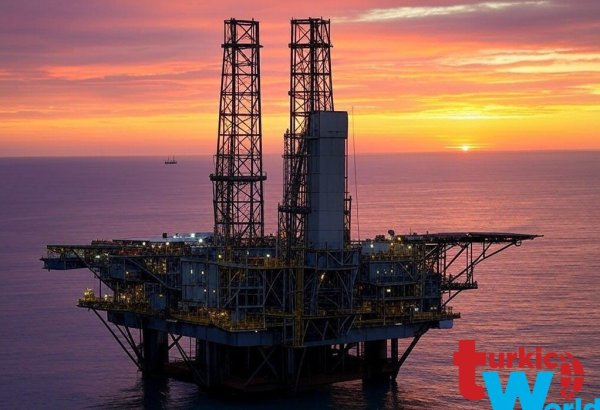
"Shah Deniz is one of the world’s largest gas condensate fields; however, it is a relatively mature asset that reached plateau production at around 27.8 bcm in 2024 and 27.6 bcm in 2025 and will likely hover around 27 bcm over 2026-27.
Longer-term volume risks associated with gradual production decline because of natural depletion are mitigated by the $2.9 billion SD Compression project launched in 2025, which aims to improve recovery rates and extend plateau production, with first gas targeted in 2029. The participation of international oil companies under the SD PSA, with BP acting as the field operator, also adds to operational stability by bringing technical expertise and experience. Moreover, potential gas supplies from the country’s other gas fields should help maintain utilisation of the pipeline infrastructure as SD enters natural decline," the report says.
Data from Azerbaijan’s energy ministry reveals that in January-March 2026, the country exported 6.5 billion cubic meters of gas, including 3 billion cubic meters to Europe, 2.4 billion cubic meters to Türkiye (of which 1.5 billion cubic meters were transported via TANAP), 0.8 billion cubic meters to Georgia, and 0.3 billion cubic meters to Syria.
During the reporting period, Azerbaijan’s natural gas production amounted to 12.6 billion cubic meters.
Production included 3.5 billion cubic meters from the Azeri–Chirag–Gunashli field, 6.9 billion cubic meters from the Shah Deniz field, 0.4 billion cubic meters from the Absheron field, and 1.8 billion cubic meters provided by SOCAR.