

BAKU, Azerbaijan, November 6. In the period from January through October 2026, the consumer price index (inflation) in Azerbaijan rose by 5.6% compared to the same period last year.
According to data from the State Statistics Committee, this figure is 0.1 percentage points lower than the 5.7% inflation rate recorded in the first nine months of 2026.
Thus, by the end of October, the country saw a slight slowdown in the rate of annual inflation.
The 5.6% increase in the consumer price index means that, over the first 10 months of 2026, consumer prices rose by an average of 5.6% compared to the same period last year.
According to forecasts by the international financial group ING Group as of November 10, inflation in the third and fourth quarters of 2026 is expected to be 5.7% in annual terms. The organization also estimates the average annual inflation rate for 2026 at 5.7%.
According to the forecasts, inflation is expected to gradually slow in 2027. Specifically, annual inflation is projected to be 5.5% in the first and second quarters of that year and 5.4% in the third and fourth quarters. As a result, average annual inflation for 2027 is projected to be 5.6%.
However, ING Group expects inflation to rise again in 2028, reaching 6%.
What is the Central Bank's inflation forecast?
The Central Bank of Azerbaijan also forecasts that inflation will remain within the target range in the medium term.
According to the Central Bank’s October forecasts, under the baseline scenario, annual inflation is expected to be 5.9% at the end of both 2026 and 2027. Compared with the July forecast, inflation projections for 2026 have been lowered by 0.2 percentage points, while those for 2027 have been raised by 0.1 percentage points.
The Central Bank’s baseline scenario assumes that state-regulated prices and tariffs will remain stable.
According to the regulator’s assessment, the main risks related to inflation stem from the international economic environment. Amid global geopolitical uncertainty, rising energy and food prices, as well as the pass-through of these price increases to the domestic market via Azerbaijan’s major trading partners, remain a significant inflation risk.
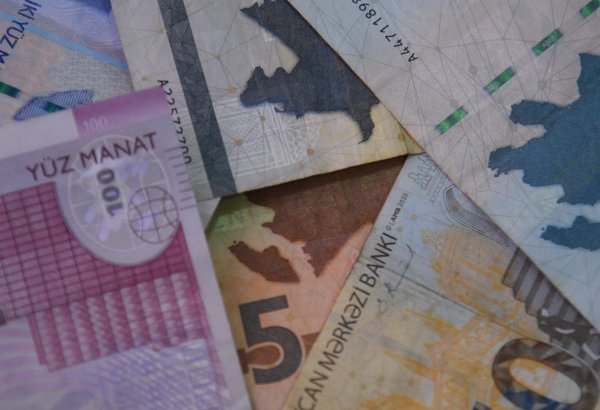
The Central Bank believes that the extent to which external price changes will affect the country’s economy will depend, among other factors, on the dynamics of the manat’s nominal effective exchange rate. Updates to inflation forecasts for the coming period will largely depend on the extent to which these risks materialize.
At the same time, under current fiscal and monetary policy conditions, domestic demand is not expected to exert significant inflationary pressure.
Food prices are rising even more.
According to the Central Bank, 12-month inflation stood at 5.5% in September 2026. This is 0.2 percentage points lower than in August.
Looking at the breakdown of annual price increases, it is clear that the highest rate was recorded in the category of food, alcoholic beverages, and tobacco products. Annual inflation for these goods stood at 6.9%.
Prices for paid services rose by 5.1% compared to the same period last year, while prices for non-food goods rose by 3.6%. Annual core inflation stood at 4.9%.
Thus, although overall inflation in September stood at 5.5%, price increases for food, alcoholic beverages, and tobacco products exceeded the overall rate.
The Central Bank of Azerbaijan’s inflation target range is 4±2%, or 2–6%. Current figures indicate that annual inflation is within this range. ING Group’s forecasts also suggest that inflation will generally remain near this range over the next two years and may rise to 6% in 2028.